

The NCAA has become the Wild West. Players transfer to a new school every single season, and agents work backroom deals as games trudge on in the meantime. NIL has been twisted into a pay-to-play system. The NCAA, in the midst of a handful of lawsuits, has turned its attention to Congress in hopes for help.
Mark Pope went as far as to outright ask the NCAA to stop the craziness, even if he's being forced to actively participate in it. Coaches are going to do whatever it takes to win. Thankfully, though, Congress has actually put forth a bill that could change the game for good.
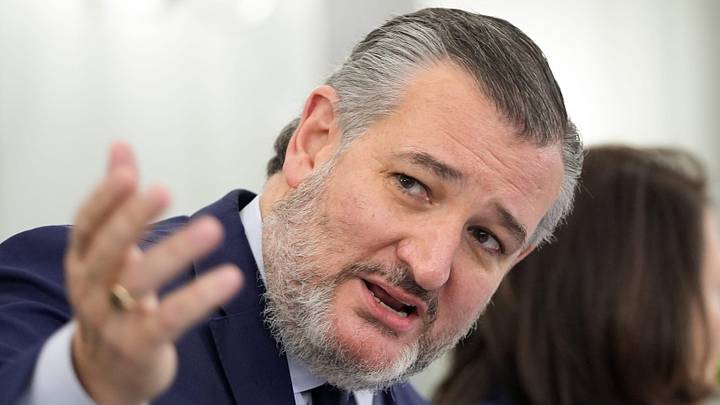
Senators Ted Cruz and Maria Cantwell are working to reshape the entire landscape of college athletics.
The Ted Cruz/Maria Cantwell Bill
This bill boasts two key Senators, one from each political side, working together to install some much-needed guidelines. Let's break it down.:
- One-Time Transfer Limit: This is the biggest one. Athletes are permitted only one free transfer. Any subsequent transfers require the athlete to sit out a season of eligibility unless specific conditions are met.
- Five-Year Eligibility Window: This sensibly establishes a strict five-year length of eligibility for all college athletes.
- Professional Restrictions: Bars any athlete who has competed professionally and earned compensation beyond tournament prize money (including international athletes) from participating in college sports.
That last one is going to be the most controversial. Right now, coaches are relying heavily on the overseas market for adults who have played professional hoops. Stopping that for everyone eliminates the need for individual clearances or a case-by-case basis approach.
One rule to rule them all. But the bill also targets money.
Financial Compensation
- National NIL Standard: Preempts individual state laws to create a single, unified national standard for Name, Image, and Likeness (NIL) compensation.
- Agent Fee Cap: Creates an official agent registry and restricts agent fees to a maximum of 5%.
- Targeting "Phony" Deals: Empowers the NCAA and the new College Sports Commission (CSC) to reject third-party NIL deals or booster payments that lack a "valid business purpose."
- Floating Salary Cap: Grants conferences the ability to adjust or increase the overarching roster compensation cap (which sits at $21.3 million per school next year) to ensure player compensation rates do not decrease.
- Neutrality on Employment: Does not formally classify athletes as employees, intentionally leaving the door open for future possibilities like collective bargaining.
This may be where the bill loses some support. I personally love the agent cap; it should prevent bad advice from being given to athletes from people who are just looking to cash in. I also dig the phony deals standard - I'm not sure any athlete should make $2 million for signing an autograph.
This also sets up some important legal rights.
NEW: Sens. Ted Cruz and Maria Cantwell have introduced bipartisan legislation, The Protect College Sports Act:
— On3 (@On3) May 27, 2026
• One-time transfer, 5-year eligibility
• "Lane Kiffin Rule" preventing coaches from leaving midseason
• Ban pro players, including international pro players… pic.twitter.com/pMby9JFGWK
Protections and Legal Rights
- Private Right of Action: Gives athletes the legal right to file claims if they believe the laws regarding NIL compensation and revenue sharing are being violated.
- Guaranteed Care & Scholarships: Mandates guaranteed medical care and academic scholarships for athletes.
- Athlete Arbitration: Keeps intact a pathway for athletes to arbitrate rejected NIL deals through the CSC.
- Lower-Resource Medical Trust: Establishes a medical trust fund specifically designed to support lower-resource athletic departments.
This is maybe my favorite section of the whole thing; the lower resource medical trust is exactly the kind of thing that makes total sense. If an athletic department can't pay for insurance, some of the shared money can go to them to pay that bill. It keeps doors open and scholarships flowing, and that is what college sports are all about.
And the bill focuses on the actual games, too.
Conference Governance and Coaching
- The "Lane Kiffin Rule": Makes it illegal for head coaches to abandon their teams before a season concludes, and prohibits schools from hiring a new coach before their current season is completely over.
- "Super League" Prevention: Prohibits conferences that report over $1 billion in revenue on their 2025 tax returns (a threshold currently only met by the Big Ten and SEC) from merging or consolidating with one another.
- Antitrust Exemptions: Grants the NCAA highly targeted antitrust protection, allowing it to enforce the specific rules outlined in this bill without the constant threat of litigation.
- New Study Commission: Establishes a commission to study the long-term governance of college sports and evaluate the potential impacts of pooling media rights.
The bill offers conferences a voluntary option to pool their media rights together to generate more revenue, similar to the NFL. To do this, at least 75% of the 138 FBS schools would need to agree. If conferences choose to exercise this option, three specific mandates are automatically triggered:
- Local Broadcast Protections: Games featuring local teams cannot be placed entirely behind paywalls, ensuring local communities maintain viewing access.
- Olympic Sport Preservation: Schools are strictly required to maintain their scholarship and roster levels for Olympic sports, based on their previous three years of funding.
- Regional Rivalry Mandates: Schools must restart historic rivalry games if they find themselves competing in a conference that does not include at least three of their top 10 most-played historical opponents.
Being able to share revenue would be huge for college programs, in any sport. And if it happens, we get more competitive games, Olympic sports staying put, and rivalry matchups continuing? This is really a home run in the making.
Will it pass? We can't be sure, but it makes more than enough sense the support from fans will definitely be there. Maybe college athletics isn't too far gone after all, BBN.
 Add us as a preferred source on Google