

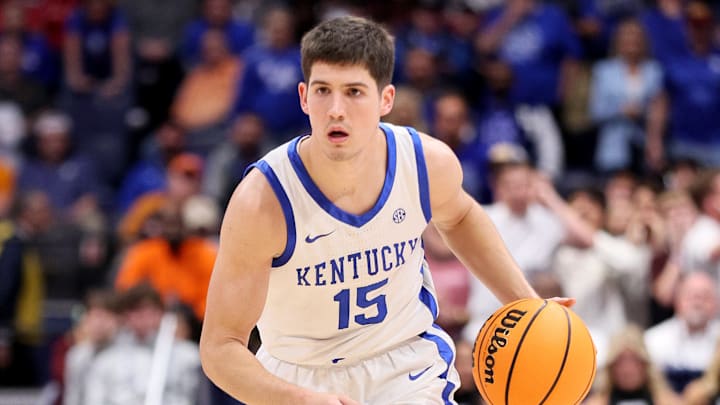
Reed Sheppard didn’t grow up hoping to wear Kentucky blue. He grew up believing it was his turn.
“I wanted to stay at Kentucky as long as I could. Dream school. Be like my Dad, (he) played there four years and won 2 championships. That was my goal.”
It’s a quote that still lands like a heavy exhale, because it tells you two things at once. One, he meant it. Two, Kentucky doesn’t usually lose guys who talk like that unless the basketball gods start throwing extra zeroes on the decision.
“I wanted to stay at Kentucky as long as I could. Dream school. Be like my Dad, (he) played there four years and won 2 championships. That was my goal.”
— Cats Coverage (@Cats_Coverage) December 19, 2025
- Reed Sheppard pic.twitter.com/21VFFhNPCh
And that’s exactly what happened.
Sheppard walked into Lexington as the local kid with a jumper and the kind of feel that makes old coaches nod quietly instead of talking. He walked out after one season as the guy who made “one-and-done” feel like an understatement.
By the end of his freshman year, the production wasn’t just impressive — it was clean. Efficient. Repeatable. The numbers looked like they belonged to a veteran guard who’d been torturing the SEC for three years, not a freshman still figuring out which way traffic runs on Limestone.
Sheppard’s Kentucky résumé was the kind that ages well:
- 33 games
- 12.5 points
- 4.1 rebounds
- 4.5 assists
- 53.6% from the field, 52.1% from three, 83.1% at the line
- 67.9% effective field-goal percentage
That’s not just “good freshman.” That’s “why are we even pretending he’s coming back” freshman.
Reed Sheppard and the Kentucky basketball fit with Mark Pope
This is where the what-if gets teeth.
Mark Pope’s offensive values are not subtle. Space the floor. Let it fly. Play with pace. Punish teams for helping. Make defenders pick their poison and then act offended when they choose wrong.
If you’re building that in a lab, you build it with a guard who shoots it like Sheppard, processes like Sheppard, and doesn’t need five dribbles to make a defense pay.
And yes, Kentucky could have used him, especially when injuries changed the math. When Lamont Butler missed time, the margins got thin. One more high-level spacer changes possessions. One more guard who can create a clean look without the offense turning into a late-clock rescue mission? That’s the difference between “survive” and “roll.”
You can make a real argument that a sophomore Reed Sheppard under Pope would have been nasty in the best way. More reps. More strength. More comfort. Another year of people trying to chase him off the line and finding out, repeatedly, that it doesn’t work.
But this is where fans have to be honest. Coming back would’ve been fun. It wouldn’t have been smart.
The draft didn’t just like Reed. It treated him like a franchise asset. He went No. 3 overall, and you don’t leave that kind of money on the table because it might feel better for the heart in February.
Reed Sheppard in the NBA shows why the decision was real
The early pro numbers tell the story of a player who was always going to grow into the league once the minutes came.
Across his first two seasons, Sheppard’s role expanded and the production followed:
- Year 1: 52 games, 12.6 minutes, 4.4 points
- Year 2: 25 games, 25.5 minutes, 13.4 points
That second-season leap is the part Kentucky fans recognize immediately. Same player. Same confidence. Same shot-making. Just more oxygen.
So yes, it would have been awesome to watch Reed stay two years. He would have lit up Rupp, hit those back-breaking threes that make visiting coaches stare at their shoes, and made the “Kentucky guard line” argument feel loud again.
But the goal changed because the circumstances changed. He didn’t abandon Kentucky. He outgrew the timeline.
That’s the real sting of the what-if: Reed Sheppard wanted four years. Basketball only allowed one.
 Add us as a preferred source on Google