

College football analyst Josh Pate recently took to X to try and solve a problem that has hindered college football for the better part of a decade: conference shuffling.
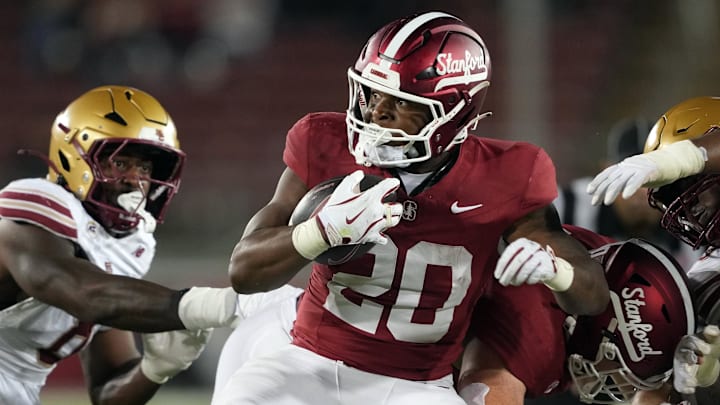
When you have Boston College traveling across the country to take on Stanford in a conference game, something is fundamentally wrong with the sport. We have entered an era of super conferences where teams rarely play each other, and the schedule no longer provides a true representation of what college football is all about.
The Pate Proposal
Pate took a shot at redoing the map entirely, moving away from the "money-first" expansion and back toward a logical, regional structure. His model focuses on grouping teams by proximity, ensuring that the history and rivalries of the sport remain intact while eliminating the absurd travel demands currently placed on schools.
SEC: Ole Miss, Georgia, Florida, Alabama, Kentucky, Mississippi State, South Carolina, Tennessee, Auburn, LSU
That seems to be a hard group for the Cats, but really it is no different than who they play now anyway.
ACC: Miami (FL), Florida State, NC State, UNC, Clemson, Wake Forest, Duke, Georgia Tech, Virginia, Maryland
Big Ten: Ohio State, Michigan, Michigan State, Penn State, Iowa, Minnesota, Wisconsin, Purdue, Illinois, Indiana
Big East: Boston College, Pittsburgh, Louisville, Rutgers, Syracuse, Virginia Tech, West Virginia, Cincinatti, UCONN, UCF
Southwest: Texas, Texas Tech, SMU, Baylor, Texas A&M, TCU, Rice, Houston, Arkansas, Tulane
Big 8: Oklahoma, Kansas, Kansas State, Iowa State, Nebraska, BYU, Oklahoma State, Missouri, Colorado, Utah
Pac 10: USC, UCLA, Oregon, Oregon State, Washington, Washington State, Cal, Stanford, Arizona, Arizona State
Independent: Notre Dame, Northwestern, Vanderbilt
The case for geo-locking is a strong one
If it were me, the map would definitely be geo-locked. There is no logical reason for Pacific coast teams to be traveling to the Atlantic coast for regular-season conference games.
Beyond the fans, we have to consider the student-athletes. These guys aren't professionals; they have classes, study halls, and lives outside of the gridiron. Forcing a 19-year-old to fly five hours for a road game every other week is a massive burden. Then there is the logistical side of the whole thing. Imagine getting equipment from State College, Pennsylvania, to Eugene, Oregon, in a short period of time. It is a significantly harder (and more expensive) feat than a bus ride to Columbus, Ohio.
Restoring the sport we love
College football was built on the "Saturday in the South" or "Midwest winters" vibes. By moving toward super-conferences, we are sanitizing the sport and turning it into a semi-pro league that loses its regional soul.
Pate’s model might be a dream for now, but as the travel costs continue to pile up and the novelty of cross-country matchups wears off, a return to regional common sense might be the only way to save the game.
 Add us as a preferred source on Google